Visa & 88 days
Australia WHV: 88 days, then a ballot? What’s changing
Announced ballots for second and third years, first-WHV delays and unanswered questions: what we know on 17 September 2026.

Completing 88 days of work may no longer be enough to secure a second year in Australia. The government has announced a ballot for second and third Working Holiday visas, while some people planning their first trip are still waiting for decisions on July applications.
The position on 17 September 2026. These are separate issues: delays already affect some applicants, including first-WHV applicants. The ballot was announced on 17 September, and its start date and arrangements for people already applying or completing work still need clarification.
Second and third years: what has been announced?
The government intends to introduce a *ballot*, or random selection system, to allocate a limited number of places beyond the first year:
- Second year: 45,000 places, retaining the requirement for 88 days of eligible work.
- Third year: 5,000 places, retaining the requirement for six months of eligible work.
According to ABC News, applicants would need to complete the required work before entering the ballot. Under the announced model, meeting that requirement would allow someone to enter the selection process, without securing another year. Other visa eligibility requirements would still apply.
The announcement preserves separate treatment for British citizens under the Australia–UK free trade agreement. Travellers using other passports should not assume that this exception applies to them. Source: SBS News.
First-WHV delays and July applications
For people yet to leave, the immediate concern is waiting for approval. On 18 August, ABC reported concerns from the Backpacker and Youth Tourism Panel: some 417 and 462 applicants who had lodged applications in early July were still waiting in mid-August. Minister Tony Burke had confirmed that applications were being processed more slowly than before.
Reports also concern the first Working Holiday Visa. In a personal account posted in September, an Irish passport holder said they were still waiting for their first 417 after applying on 17 July. This is an individual account, not a statistic describing processing times for everyone.
Home Affairs confirms the broader situation: it is prioritising applications from people already in Australia, known as *onshore* applications. Some applications lodged outside Australia, or *offshore*, may therefore take several months. Published processing times reflect recently decided applications and are not guaranteed deadlines for pending cases.
Three months is a target, not a promise
In its migration reform package, Home Affairs states an intention to stabilise Working Holiday Maker processing times at three months. This target does not predict when an individual application will be decided or guarantee an approval date for applications lodged in July.
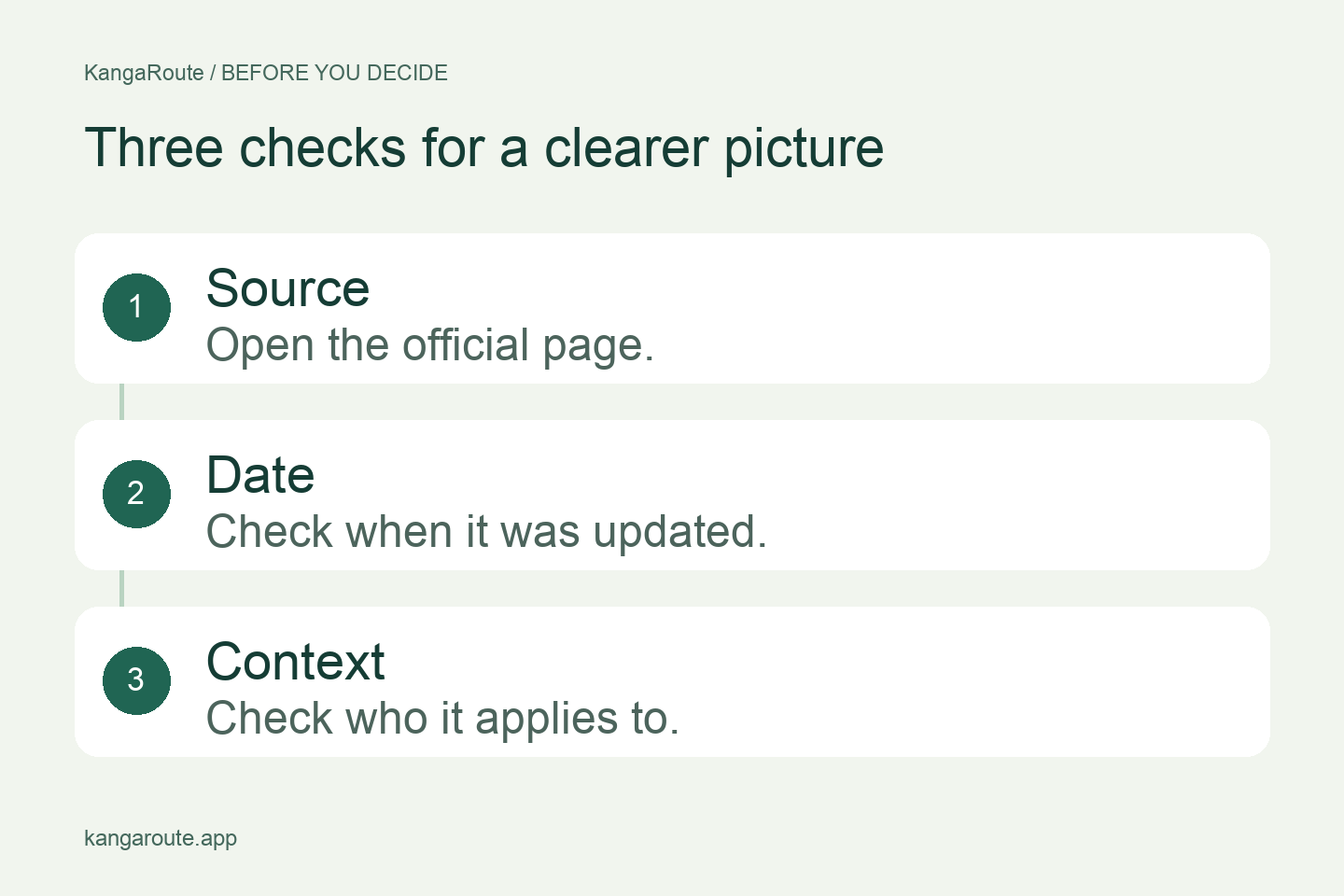
When planning departure, the key document is the visa grant notification. Home Affairs recommends waiting for it before booking flights or making travel, work or study commitments. Applicants can check their status and respond to requests for documents through ImmiAccount. Sources: processing times and WHM updates.
What remains unclear for people already in Australia?
Home Affairs says reforms will be rolled out progressively over the next twelve months. The sources reviewed do not yet specify all ballot details, including its start date, registration process and arrangements for people who have already applied or are completing the required work.
Anyone counting their 88 days or six months should assume neither that they are automatically exempt from the changes nor that their pathway is already subject to a ballot. Official implementation and transitional rules will be needed to establish which requirements apply. Source: Home Affairs.
KangaRoute is an independent project, not affiliated with the Australian government. This article is for general information, is not migration advice and reflects information available on 17 September 2026.